
Dec 11 1982

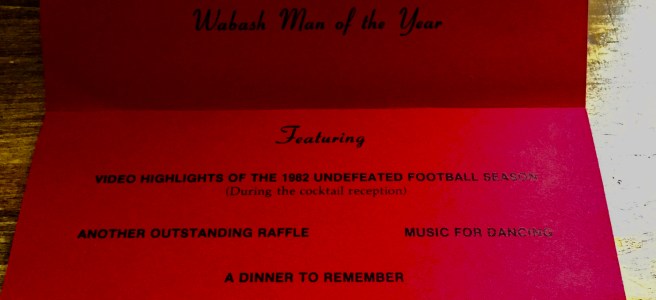
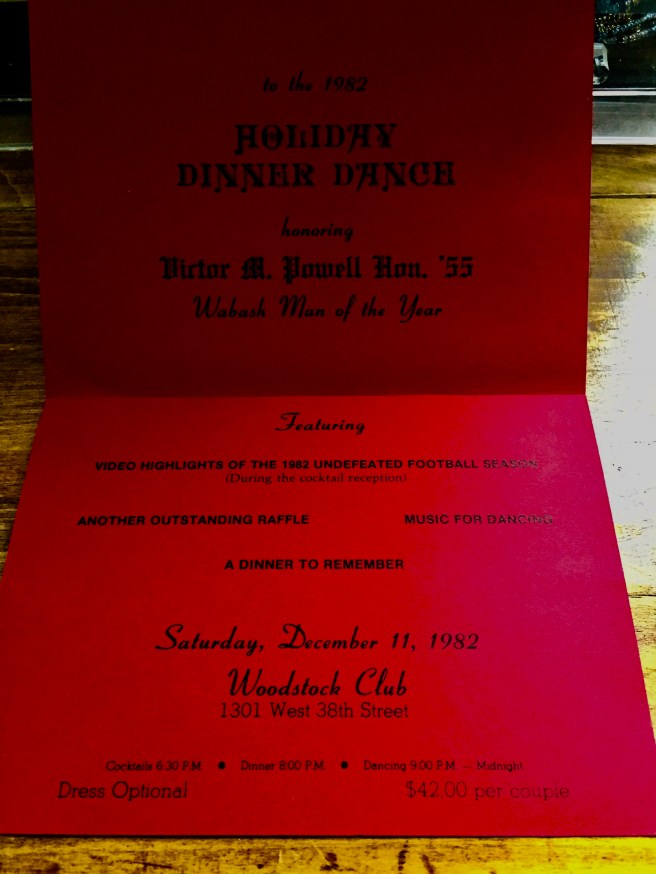
At 1301 West 38th Street in Indianapolis sits the Woodstock Club.  The West Fork of the White River is a stone’s throw away and that rivers meanders through Indiana and then falls into the Wabash River.  On the night they made me, my father took my mother to the Woodstock Club to a Holiday Dinner Dance for Wabash Men and their Ladies.  Besides dinner and dancing, there would be a raffle, a video highlight of the 1982 undefeated football season, and a presentation to honor the Wabash Man of the Year.  The invitation also mentioned “Dress Optional” and they certainly did dress before they undressed. 

Annette wore a black bouclé dress that Les had bought her at Davidson’s on the Mall in Glendale, where he picked out clothes for her and then watched her try them on.  That evening, she looked beautiful, but more importantly she felt beautiful. 

On their way to their evening of dinner and dancing, Les stopped for his Lucky Strike cigarettes.  As she watched him walk across the parking lot, she was so in love and enamored by his handsome swagger.  He walked with the confidence of a man who knows he is handsome. 

They did not win the raffle or watch the video highlights—they dined and drank, danced and dashed.  From the Woodstock Club, they headed south to Route 40, a sleepy old highway that at one time went from coast to coast—Atlantic City to San Francisco—but now ends near Park City, Utah.  Annette soon discovered that she had a little too much fun, a little too much drink, and she got sick all over her black bouclé dress.  So they took a left at State Road 9 in Greenfield to Les’s house on Michigan Street, where he washed her dress for her.  

If they had taken a right, though, and then a left on Route 52 they would have come to the Bluebird Lounge in Morristown. Across the street from the Bluebird Lounge is the more-dressed-up Kopper Kettle Inn Restaurant, where they often had family meals as children and where they would one day take their own family and where, a day further on, Annette would host the bridal shower for the baby girl they were about to make. But, about twenty years earlier as young teenagers, it was the Bluebird Lounge they went to on a date.  

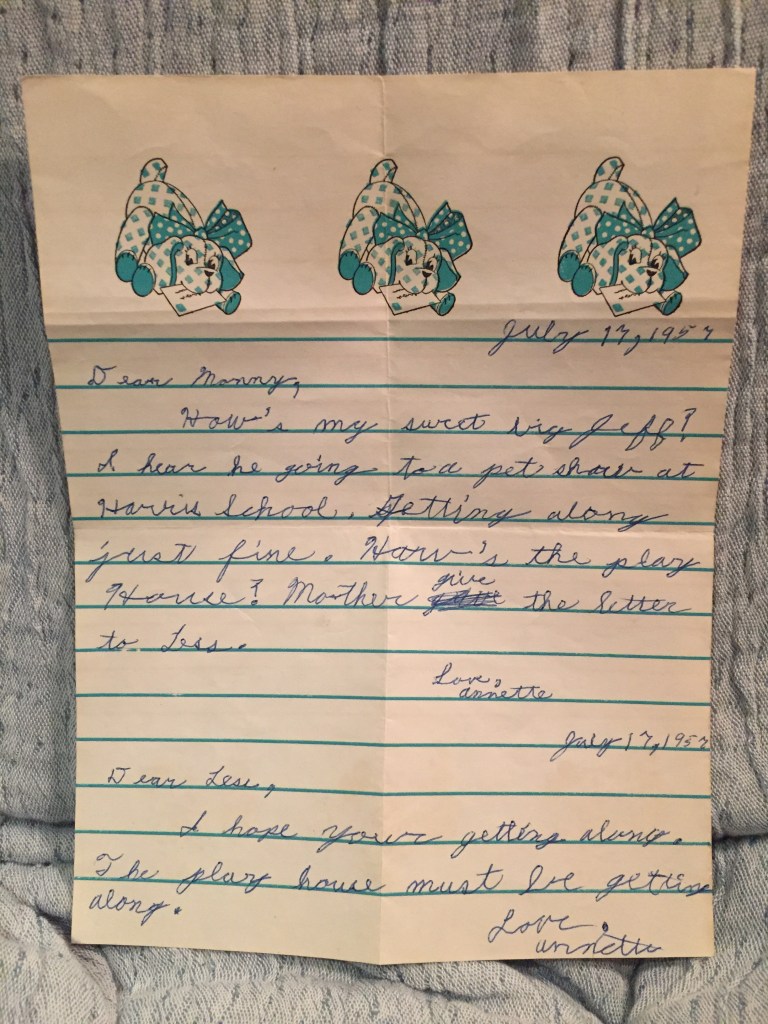
Their dinner had been pre-ordered for them by their parents, and it began with a fruit entree of watermelon. They joked about how far they had come from their playhouse days, remembering when Annette was ten and Les was nine, and she wrote a letter home while visiting her aunt on the East Coast. It began with a brief paragraph for her mother before instructing her mother to “give the letter to Les.” At the bottom, she wrote:

“Dear Les, I hope your [sic] getting along. The playhouse must be getting along. Love, Annette.” 
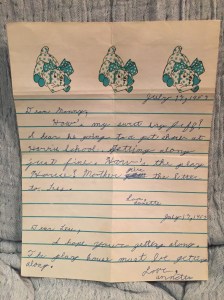
She ran a tight ship even then, and perhaps little Les ran out to check on the state of things. Or perhaps he didn’t, a sad foreshadowing of the mistakes they would both make that would cause their grown-up marriage to crumble.

They enjoyed their watermelon entree before life would take them different ways after high school and through their twenties.  Then they would find their way back to each other, all grown-up but not so different from the kids they were in the playhouse. 

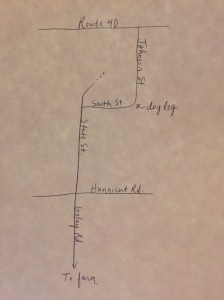
After Les cleaned Annette’s dress, they made their way back to Route 40 and continued on through Knightstown and Lewisville and Straughn until they reached Dublin.  A right turn at Johnson Street which becomes South Street at the dogleg, and then (stay with me) a left on State Street which becomes Golay Road after Hunnicut, will bring you to the family farm Annette had known all her life.  That is where they were headed.  In case I lost you, here’s a map: 
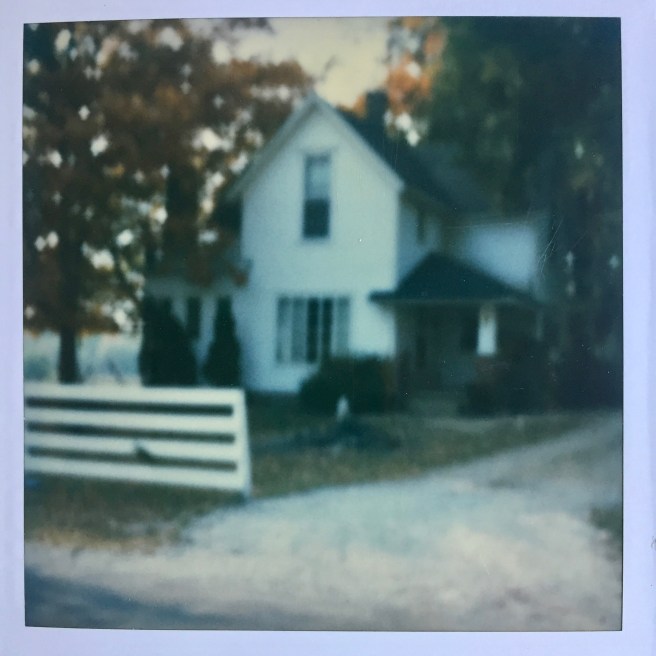
It was a true homestead, made up of a farmhouse and a smaller adjacent house, as well as a barn and farmland.  Annette’s family had come up with quite clever names for the big farmhouse and the smaller house, names that they still go by to this day in our family—the Big House and the Little House. 

The Big House and barn:

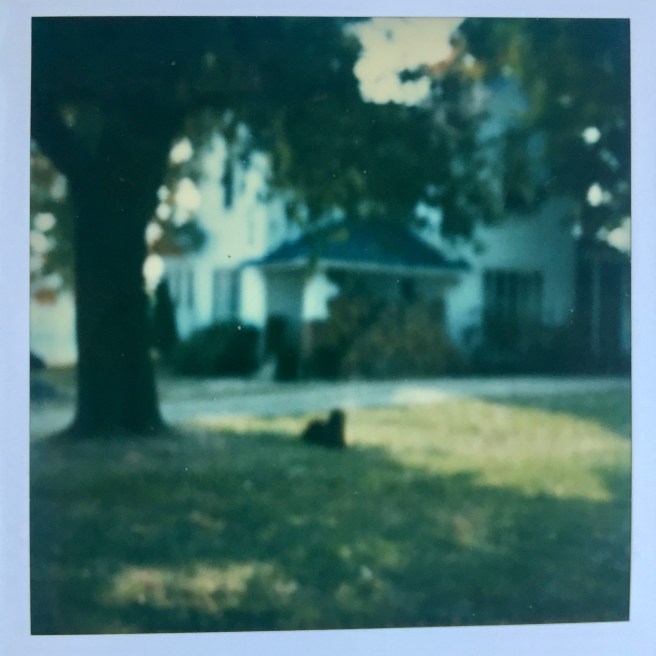
The Little House (Polaroid photos from the 80s):
They made love in the Little House, and then sat naked outside on the screened-in back porch, smoking his Lucky Strikes.  In the morning, as she watched him leave from the window upstairs, she had a moment of her life, a moment of euphoria, where she thought, “I will never be this in love again.”  Perhaps she really knew or perhaps it was a self-fulfilling prophecy, but either way she would come to know another type of love—the love between a mother and a daughter. 

An ultrasound was not commonplace in the 1980s, but one was not needed as she was sure she was having another boy. After four boys, she decided her fifth one would be named James. She did not even ponder names for a baby girl, except she knew she did not like Les’s suggestion of Aimée. It was not a baby boy, though, but a baby girl that arrived far too quickly for her to have an epidural.  After she recovered from both of these shocks, she held me in her arms and named me Jennifer.  A God-given name, she has suggested, as it came to her so suddenly, as if He sent an angel to whisper it into her ear. I don’t have the heart to tell her it was the most popular girl’s name of 1983. A new lifelong friendship began, and she took me home to the Little House. 
Gravy Rules

Gravy can be finicky.

So while watching my mom make it, I asked her to explain her gravy rules for a cooking simpleton like me.

This is what she said:

If you don’t want your gravy to taste like milk, you use water. Fried chicken dinner, you would want to use milk. I also use milk for a ham loaf. Water is used for beef dishes usually.

I can see my mother now, mixing up her flour and water in a glass. Half a glass of water and a tablespoon of flour. You want the flour mixed into the water like you’re making a paste, you don’t want the flour resting at the bottom.

Examine the bottom of your pan where you cooked your meat. You must be careful that there’s not too much fat. You want about two tablespoons of fat, so if there is more than that, remove it from the pan. This will be enough gravy for about four people.

Then you add it to the pan that you cooked your meat in, and scrape the bottom to blend the flour water with the drippings.

Turn up the heat until thickened.

(Note: At this point, my mom used the word “fond” here, which was beyond my understanding. I questioned her as to whether that was a real word, and researched it later on wikipedia. “In the culinary arts, fond is a contraction of fonds de cuisine which is loosely described as ‘the foundation and working capital of the kitchen.’ It refers to the flavorful solid bits of food stuck to a pan or pot after cooking. These bits are deglazed with a liquid in order to produce a gravy, stock, broth, or sauce.” So it is a real word, only further confirmation that my mom knows what she is talking about.)

You can add dashes of things, like Worcestershire or Kitchen Bouquet (seasoning in a bottle).

I used to use this special flour called Wondra.

Most of your flavor comes from what’s in the pan.

I hope this helps you on your gravy journey. And if you have your own tips and tricks, you know I will take them.

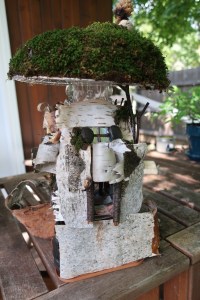
fairy garden+house

Note:  The word “tiny” will be overused in this piece of writing.

I had seen fairy garden kits in the stores, so when Annette suggested we make a fairy garden, that’s what I was picturing.  She arrived at my home and clarified the situation  – we were going to buy a few things but mostly use items found in nature. No kit for us.

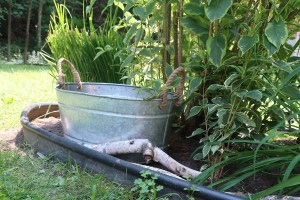
To get started, we would need real estate. We bought an oval, galvanized tub, punched some holes in the bottom for drainage and filled it with dirt. It was placed under a large shrub for protection from the elements.

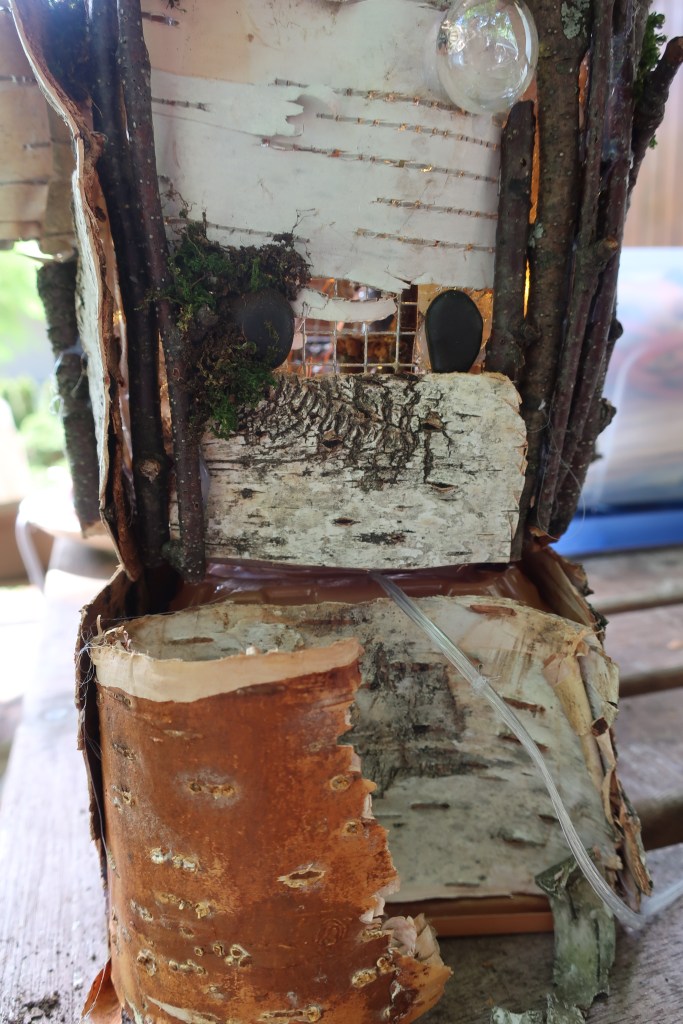
For the house, one worthy of a fairy, we would need an interesting plastic bottle. In our case, an orange juice bottle. We cut a rectangle for the front door (just big enough for a fairy to walk or fly through) and then cut some squares where we thought a fairy would want tiny windows – two side windows and a window above the front door.

Then everything came to a screeching halt when Annette discovered I did not own a hot glue gun. After the shock wore off, we went to buy one.

Upon return, we glued wire mesh on the inside of the bottle for the side windows (screens, of course, in case there are rogue fairies about who would want to break-in).  We glued a piece of aluminum foil to the inside of the front window for a reflection effect.

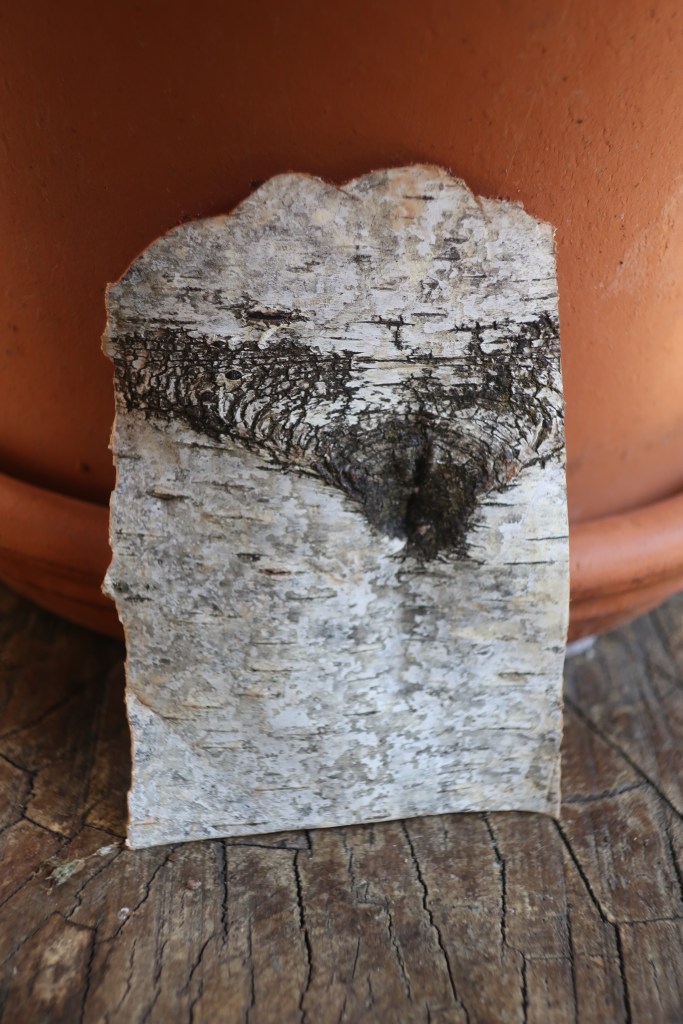
The birch tree in my backyard provided building material. The branches that never matured and fell to the ground proved to be just what she was looking for. She was also thrilled by the potential of the white bark for the siding of the fairy house.

“And the ROOF!” I over-enthusiastically suggested.

“Oh no, the roof will be made of moss,” she replied.

I then realized I was in over my head and probably not as crafty as my mom.

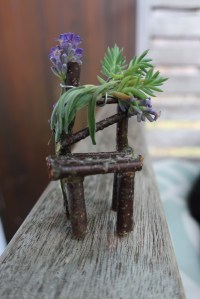
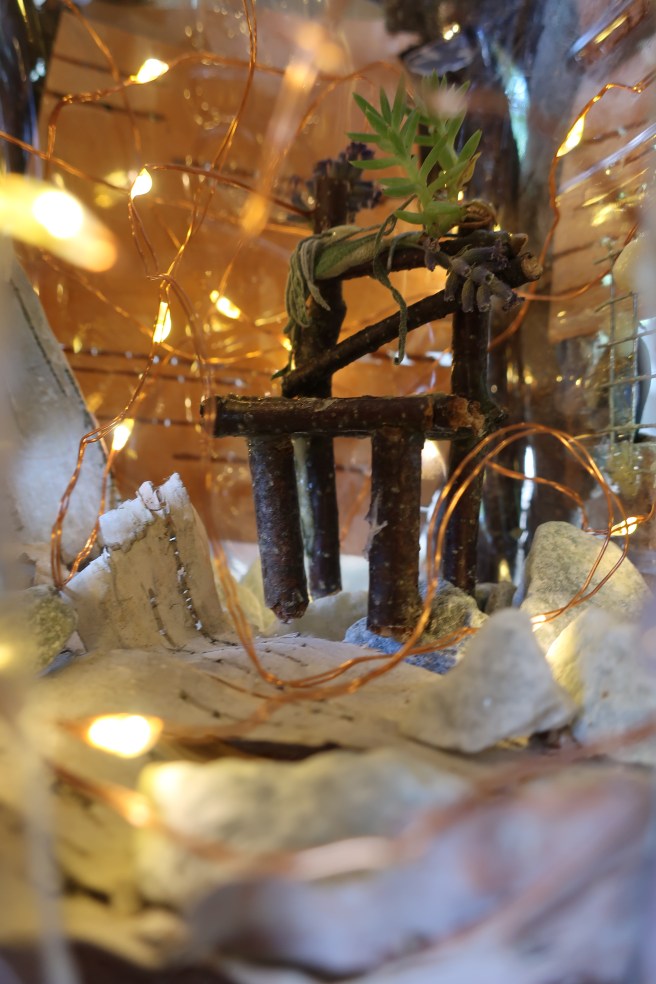
She wanted to make a chair that would go inside the fairy house. This is what she made (approx. two inches tall):

This confirmed that I was definitely not as crafty as my mom.  I was in love with this tiny chair and was immediately jealous of the fairy that would get to sit on it.  

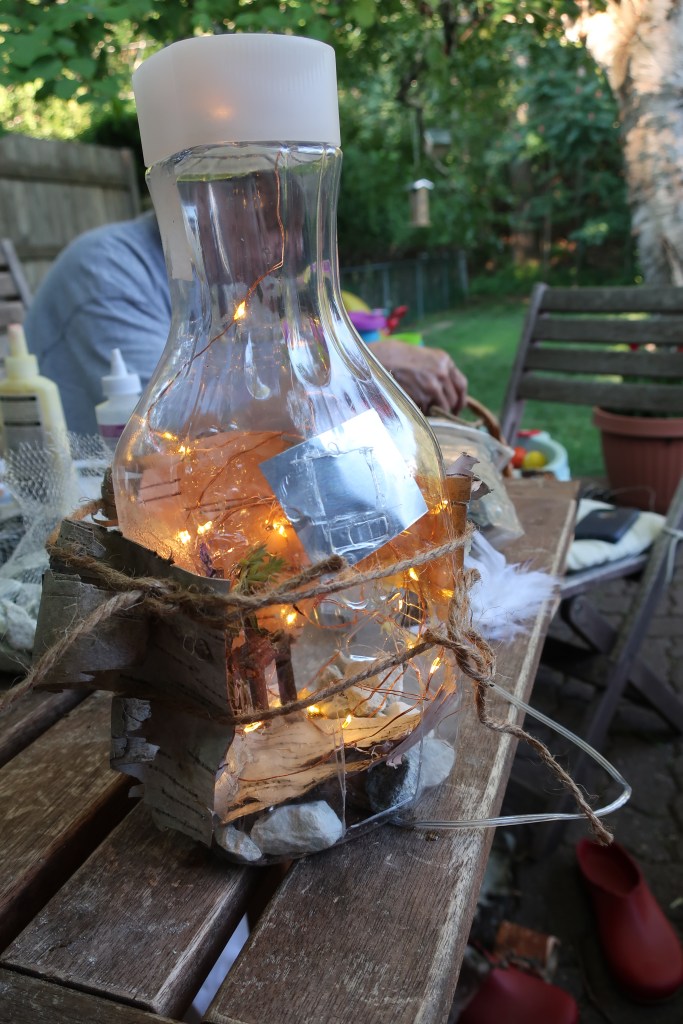
We put a layer of rocks inside the plastic-bottle-soon-to-be-home-to-a-fairy.  Then we tiled the floor with a piece of birch bark.  

We looked up what time the sun would go to sleep and set the little string of lights to turn on around then, and then placed the string of lights inside the house. Afterwards, the fairy chair found a cozy home in the corner.

“What more could this fairy ask for?” I pondered.

We began work on the siding, using carefully selected pieces of birch bark.  Once glued, we tied string around the bottle to hold the bark in place while it dried.

Then it was time for the roof.

Annette: “We need moss.”

Me: “I can’t remember the last time I saw any moss.”

Annette: “We’ll find it, and then we need to carefully scrape it so that it doesn’t fall apart.”

We took the kids for a walk and, lo and behold, found moss within a few minutes. I talked to it (I know…bear with me) as we gently ripped it from its home, “I know this hurts, but you’re going to help us make a fairy house. Wait until you see the chair.” Ever since we made this fairy house two years ago, I’m always looking for moss and making a mental note when I see it as if I am constructing countless fairy houses.

The moss was ever-so-carefully glued to an aluminum foil pie pan, which was then glued to the cap on the top of the plastic bottle.  Lots of gluing and holding in place while they dried and then re-gluing because we thought they were dry and let go but they weren’t dry so we held them for even longer the second time.  We used this time to settle on the name for our fairy.

Meadow Moonlight

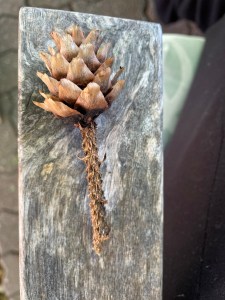
While on our walk, we had also discovered this, to which Annette said, “Well, this is obviously a tiny chimney.”

“Of course it is,” I replied.

Sticks and stones may break my bones but they can also be glued to the outside of a fairy house to reinforce and decorate.

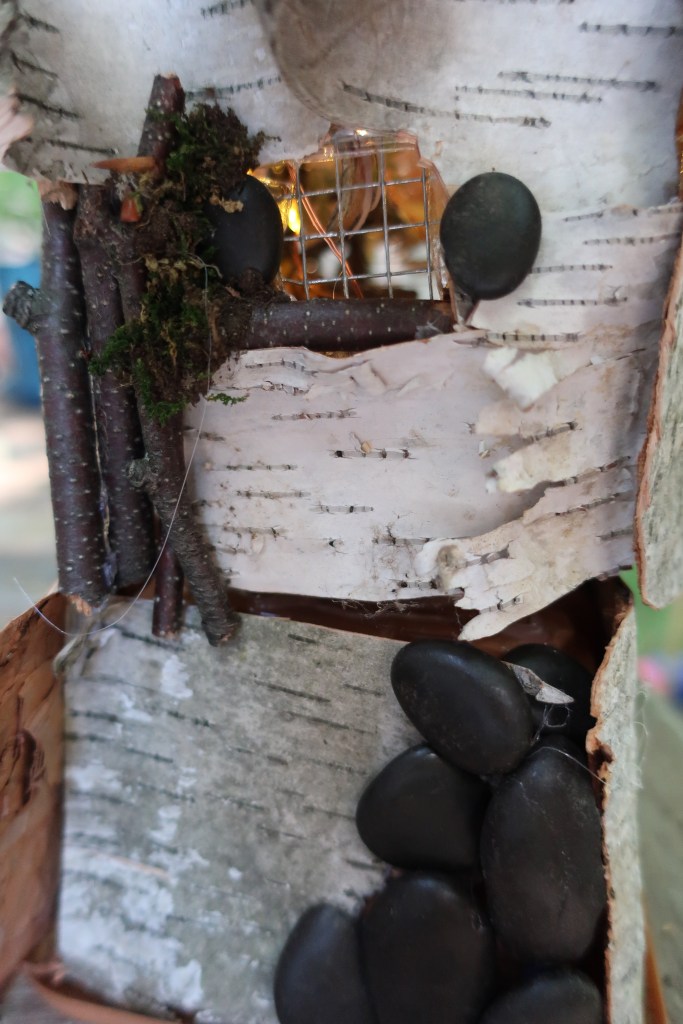
We also added a tiny window frame to the front window by crossing and gluing two sticks together:

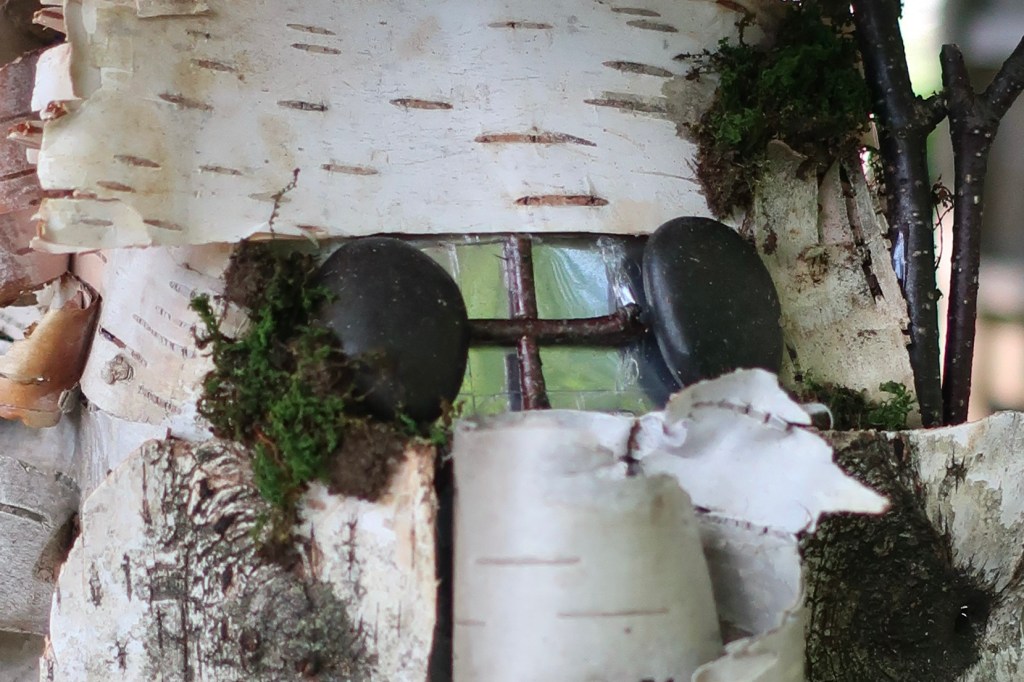
Note: Smooth black stones
make cute window shutters.
Note #2: Look at that charming
reflection effect from the aluminum foil.

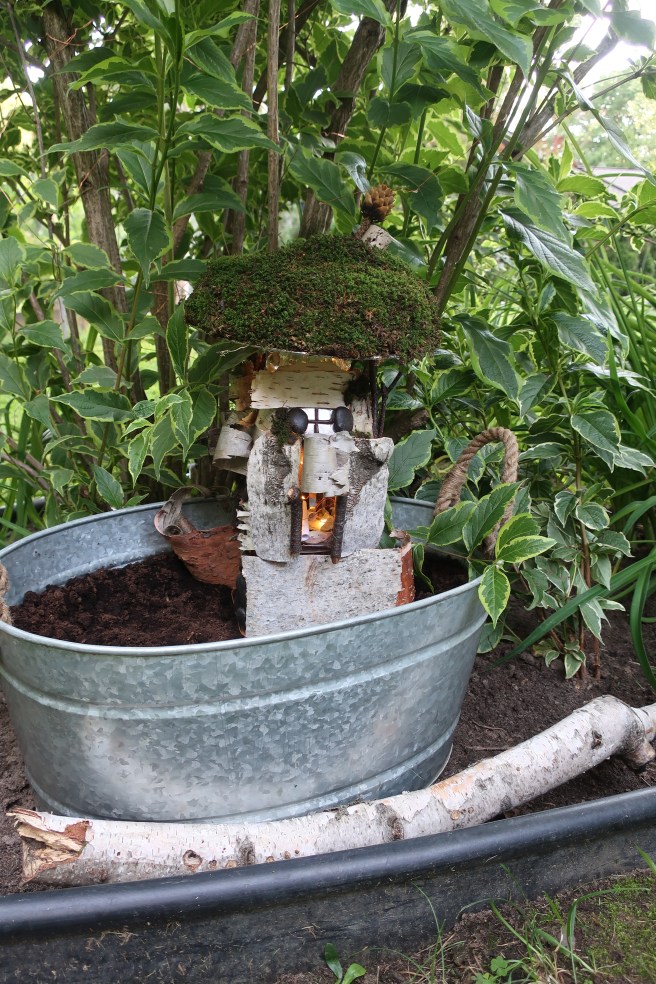
Then we turned over a plastic container (for mushrooms, in this case…not the psychedelic kind just the ones you find at the grocery) and glued the bottom of the plastic-bottle-almost-home-to-a-fairy to it. This is to elevate the fairy house from the dirt and keep it from flooding.

Then we made a few things for Meadow to add to her fairy garden+house once she moved in:

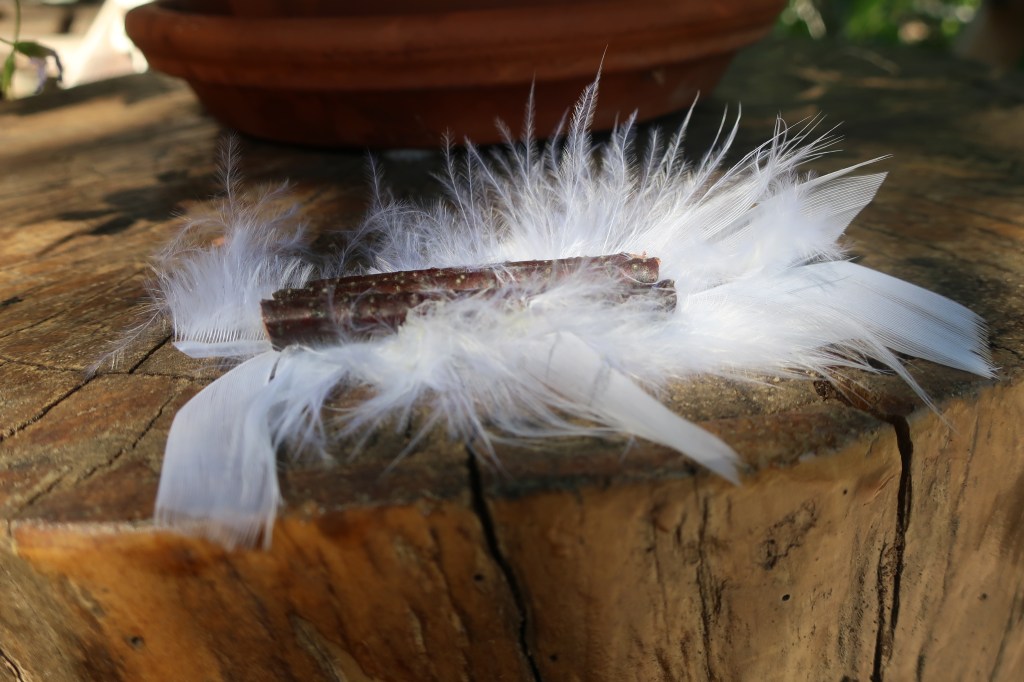
-tiny feather bed (note: if your fairy prefers a firm surface, glue three sticks together for the frame)

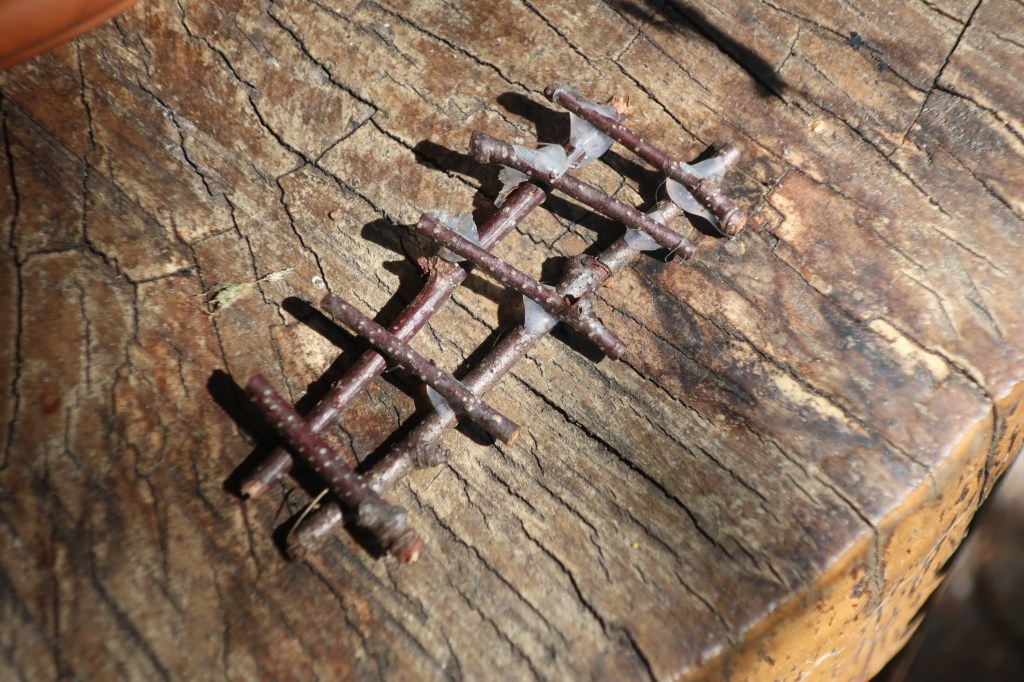
-tiny ladder for home repairs

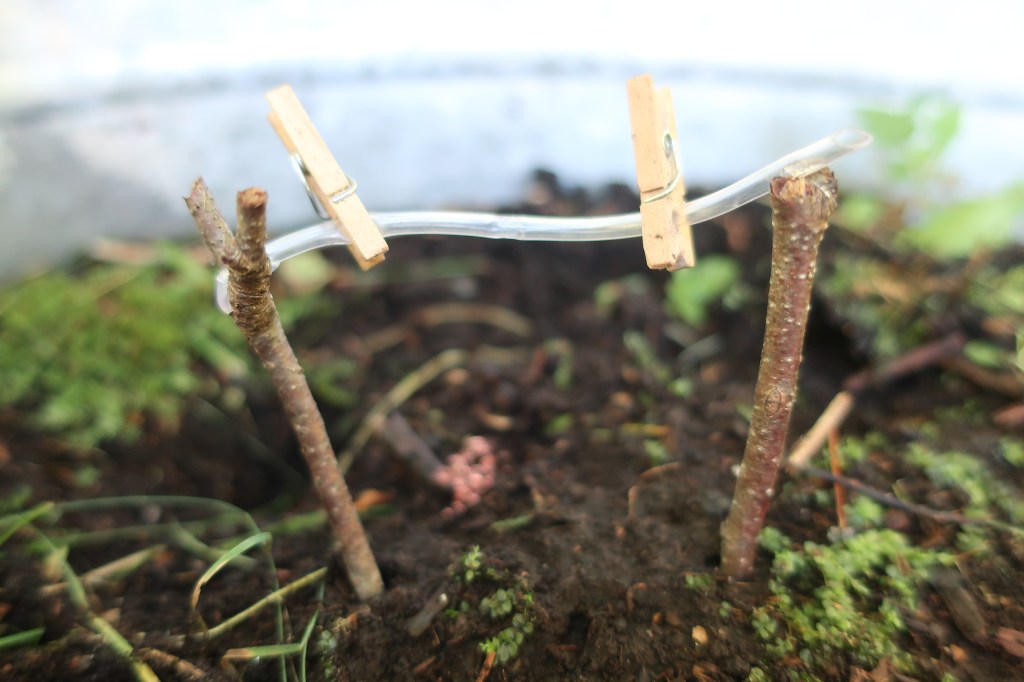
-tiny clothesline for fairy clothes

-tiny but charming front door

Notes were written on tiny pieces of paper to introduce Meadow Moonlight to the children – rolled up like tiny scrolls and placed inside shells because that seemed like one way a fairy might deliver a note.

Then we left it for them to discover.

We went to a garden center and found tiny plants for Meadow’s garden (not pictured, unfortunately, but just imagine cute, tiny plants in the soil of the oval, galvanized tub). Over time, Meadow added her bed, ladder, clothesline, pretty stones, and then some.

I said “we” throughout this piece, but it’s really Annette’s fairy garden+house.  I just did as I was told and watched in awe as it came together. 

When we finished, we gathered more birch bark and sticks for her to take home so that she can make more fairy houses with her grandchildren.  Unfortunately, her box of supplies was discovered in her car by the US border agent and the conversation went something like this:

Agent:  “What’s all this stuff for?”  

Annette:  “For fairy houses.” 

Agent:  “Houses?”  

Annette:  “Yeah, for fairies.”

He had to confiscate them, but at least he didn’t lock her up in the loony bin.

Thank you, Mom, for your beautiful creativity – I never would have made this alone and loved watching your vision come to life.

Jul 17 1957

My parents shared a lifelong love and friendship even if the whole marriage part didn’t work out.

Their parents were old friends, but Les was also the boy next door, quite literally, as their houses sat next to each other on Michigan Street in Greenfield, Indiana. They had a playhouse, which Annette took very seriously based off a letter from 1957. Nine-year-old Annette went to visit her aunt on the East Coast and wrote home to check on things.

There is a lot I love about this letter: her cursive, that she called her little brother “sweet big Jeff,” that she asked, nay demanded, her mom to give the letter to my dad, that she dated the letter twice, and those two lines of hers to my almost-nine-year-old dad that sound to me like “Hope you’re doing fine but that playhouse better be thriving.” Her letter never fails to make me smile.

Dec 6 1980

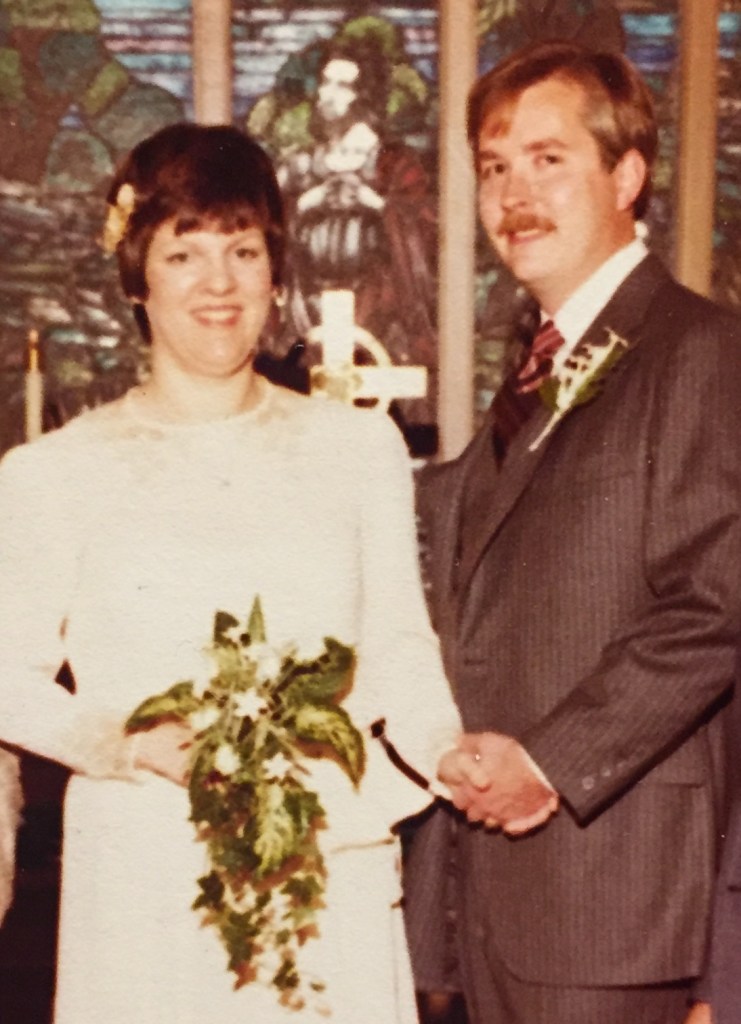
My mother was a winter bride forty-one years ago today.

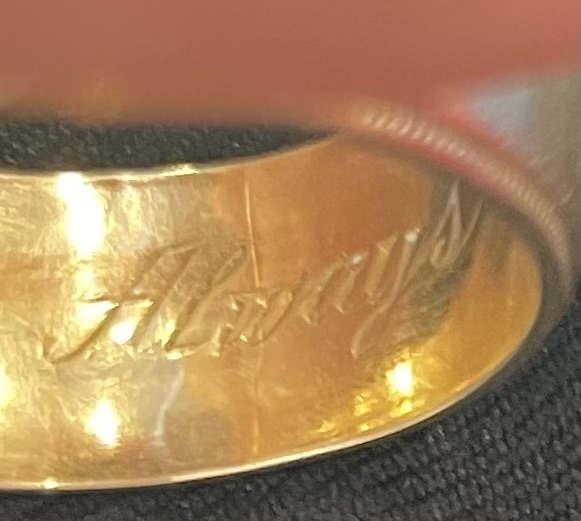
Annette and Les took their honeymoon a few months after the wedding, and they were already living apart. The playhouse wasn’t getting along. And then a telltale sign – perhaps confirming what they already knew – my father’s wedding ring cracked on their honeymoon, right through the engraving on the inside of the word “Always.” Years later, the ring will be given a second chance, repaired and worn by one of my brothers as his wedding ring.

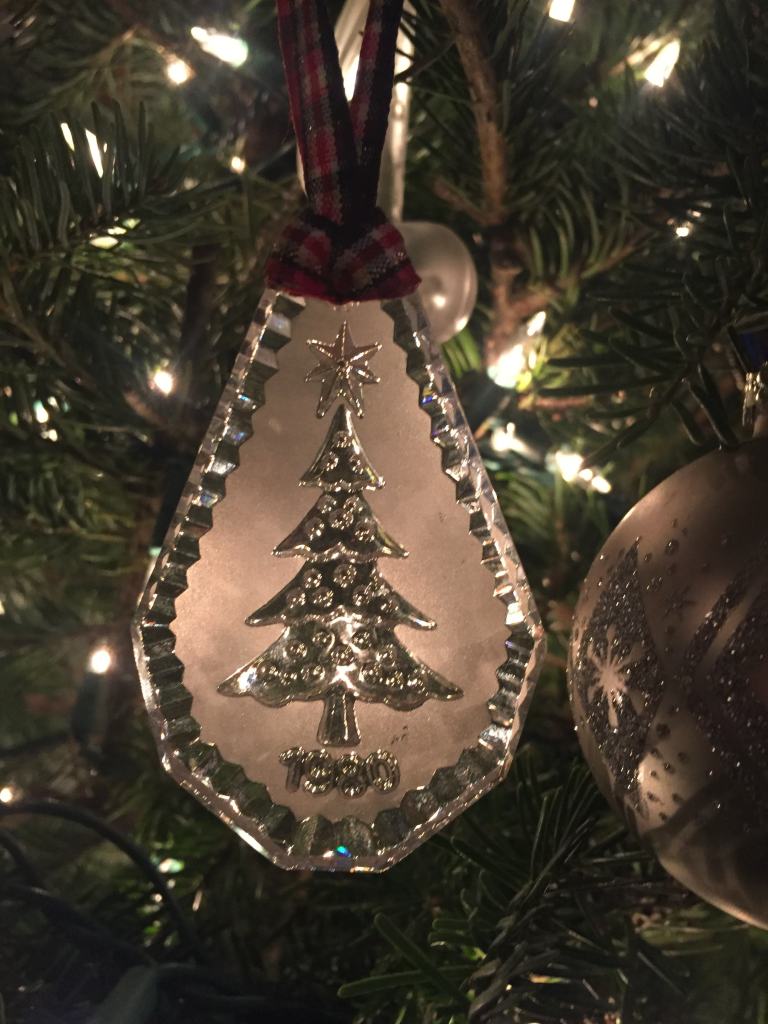
Every Christmas, I hang a beautiful crystal ornament engraved with 1980 on my tree to celebrate their friendship and their union. Happy Anniversary to my parents.