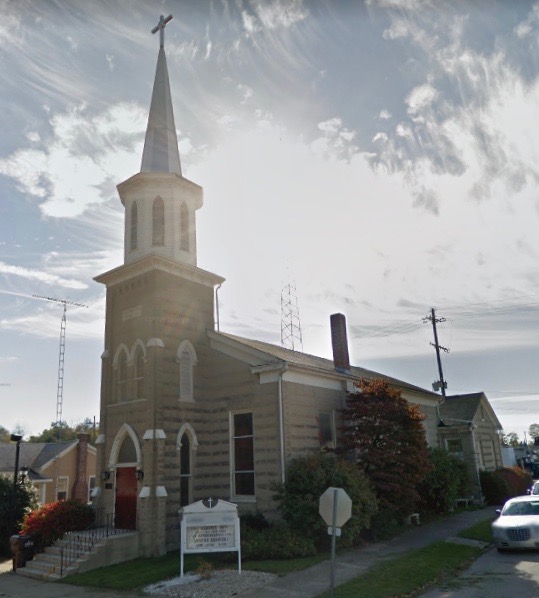
Cambridge City Presbyterian Church in Indiana
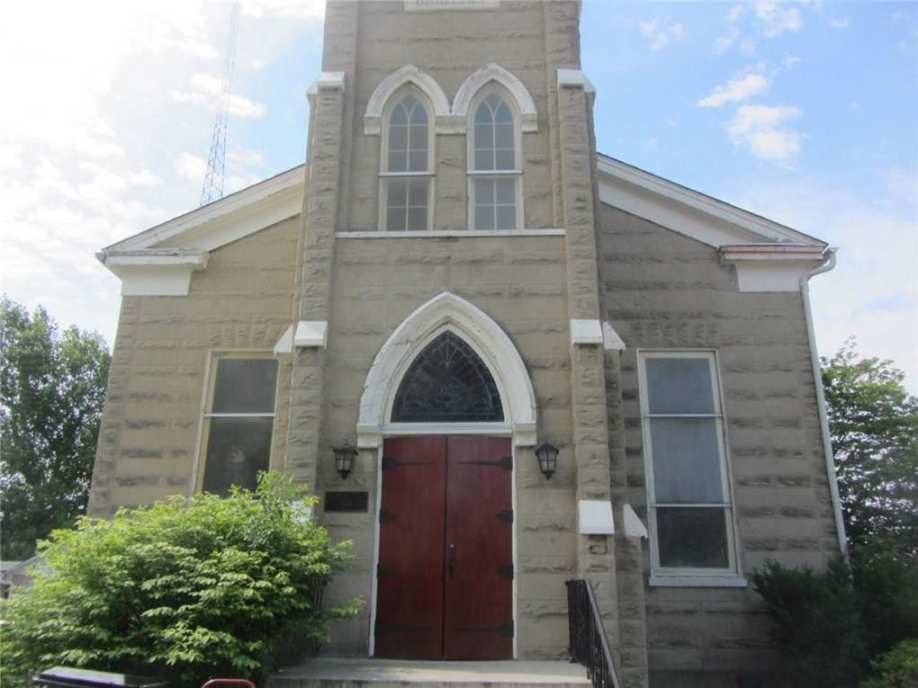
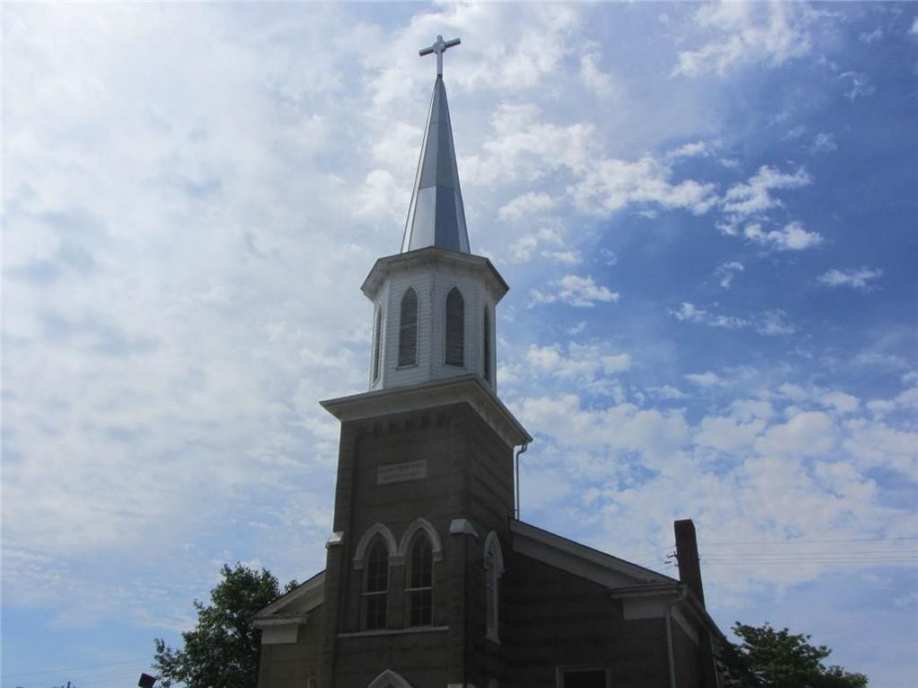
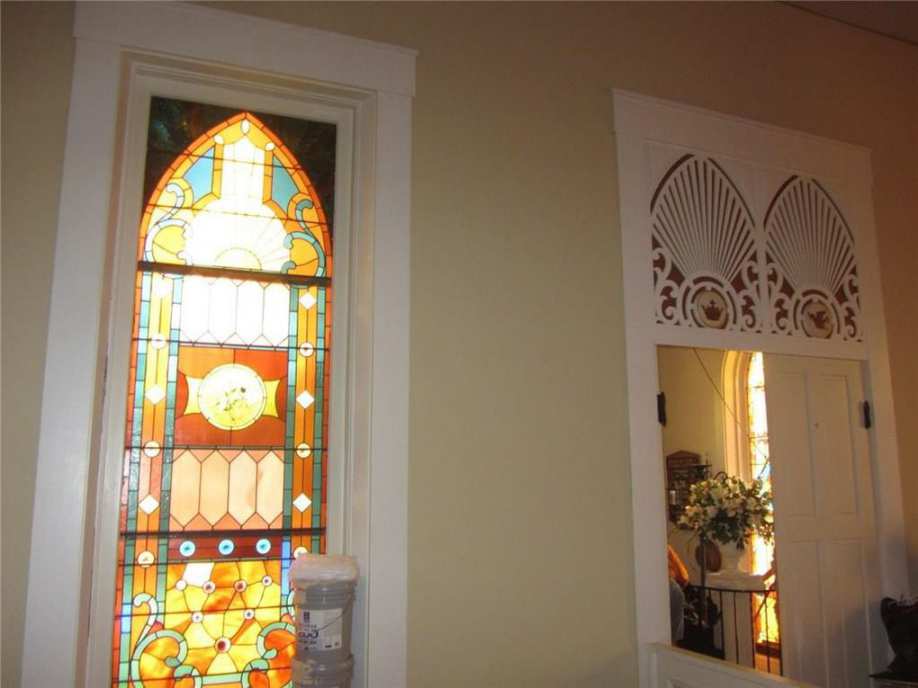

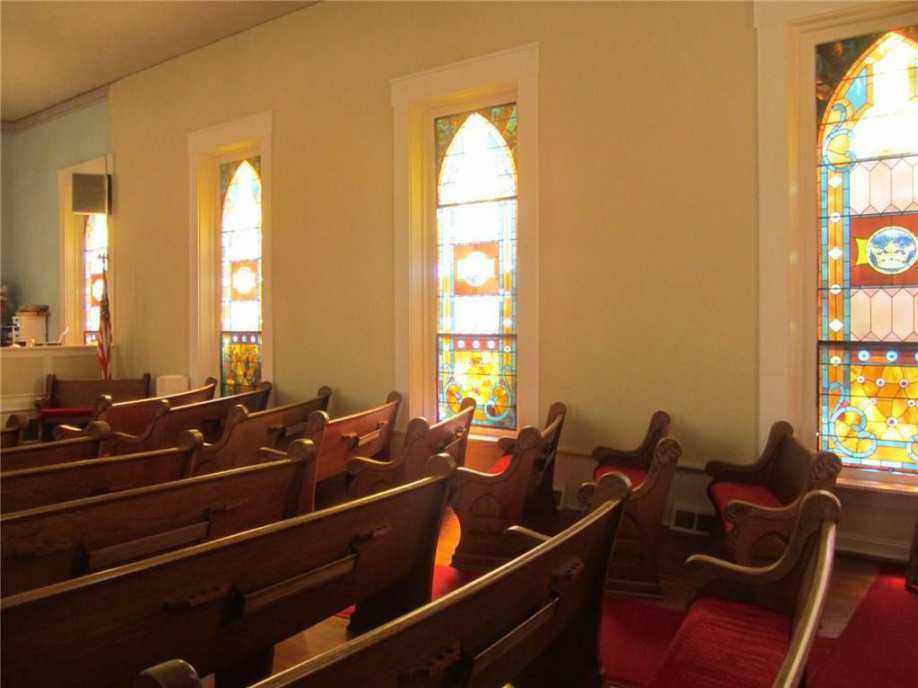
She was a quintessential small-town church, although she carried herself with confidence with her steeple, stained-glass, and flashes of red (one doesn’t wear red unless one is prepared to be noticed). Her tall red doors invited you into her sanctuary that surrounded you in even taller stained-glass windows. There were two aisles that divided three sections of wooden pews, beckoning you to sit. She had five dangling chandeliers with six sides, which I would count and re-count when a sermon moved beyond my depth. An impressive red velvet curtain hung behind the simple white cross at the altar, and that same red velvet upholstered the pews. I can still remember how it felt to rub my hand across the velvet and make designs or play Tic-Tac-Toe with my brothers. The two aisles were lined with red carpet that made you feel like you were arriving somewhere special. Because you were.

The show was really on the inside because the church had installed thick windows on the outside to protect her stained-glass from hooligans or hail — those windows were safe, come what may. When the sun shone through, the sanctuary was aglow and bright in warm colors. Sitting in those pews, I briefly considered being a minister, and I wondered if I could time the culmination of my sermons to the moment the sun’s rays broke through the clouds and reached through those windows, casting a glow that would slowly spread through the sanctuary. It would take a patient congregation but if I could get the timing right, my congregants would surely feel I had a divine connection because that glow felt like the presence of God.
The show has also been on the outside since 1858 when she was built and chose a Gothic Revival style. She originally wore brick but had a change of heart in the early 20th century when she covered herself in a lovely grey stone. And as you took her in, what caused you to look up? Was it the shining spire atop her steeple or the tolling bell? I loved to ring that bell, as all the children did at the end of a service. I would take the rope in my hands and my eyes would follow it up as far as they could. I remember the feeling of the bell’s weight as I pulled down on the rope, and the lightness as the rope slid back up through my hands. While the bell was busy ringing through my small town of 2,000 souls, I thought about how my little hands made that bell ring for all to hear. I always considered it an honor and a privilege. The rascal boys would ring it, too, but they would also wait for the coast to be clear so that they could swing from the rope down the small flight of stairs while I watched and worried about the rope breaking.
So that is the church and that is the steeple,
now let’s open the doors so I can tell you about the people.
I can still see Sam Lilley’s white truck pulling into our driveway to pick me up at my house. I didn’t know it at the time, but this is what community means — Sam would take care of me while my mom rallied her boys to get them to church. He and I would head to the church early to open the doors and prepare the coffee and donuts. Communion Sunday was especially exciting because I would get to place each one of those tiny Communion cups into the trays — perhaps a tedious task for an adult but a little game for a child. Sam let me try to pour the Communion wine, but that was a one-and-done situation before he took over as my pouring skills left something to be desired. I sampled the wine, not because I am a rebel but because it was grape juice, leaving me with a lifelong feeling that I am taking Communion whenever I drink grape juice.
After my work with Sam was done, I would wander the quiet church, peeking into the sanctuary that I found too vast to enter when it was empty. I could usually find our minister, the Reverend Paul Hopwood, in his office, and he would hear me coming as the old floors gave me away with their historic creaking. He would be at his desk, perhaps putting the final touches on his sermon, and would often ask me if I wanted to read the scripture during the service. This was far more important than coffee and donuts (but equally as important as the tiny Communion cups) and I always said yes. I can still see us together at his desk as he highlighted the verses in his Bible for me and we would read through them together to go over any difficult pronunciations.
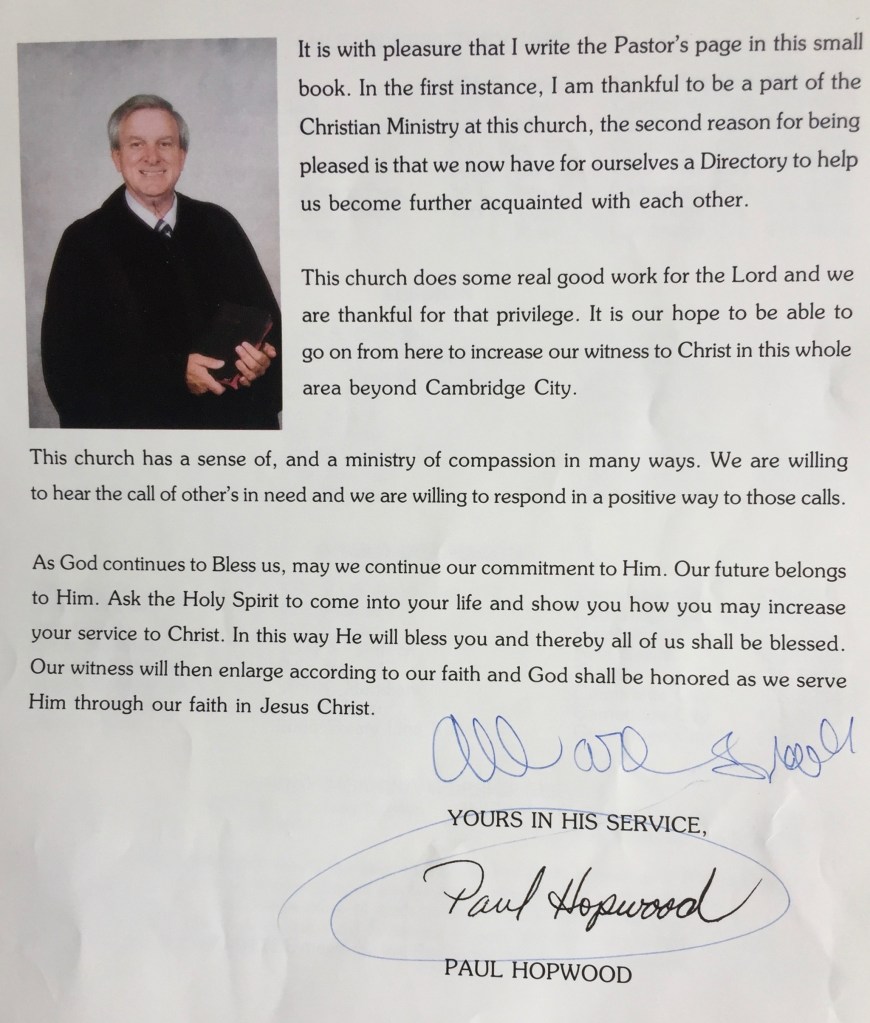
Rev. Paul Hopwood was tall and handsome with honorable white hair and a black pastoral robe and spoke at the church pulpit. Everyone always wanted to talk to him and at the end of the service, he would shake hands with all of us as he sent us out into the world. So as a very little girl, I took those clues and came to a very certain conclusion: this must be God, preaching at my small church in Cambridge City, Indiana. His wife, Jane, was pretty and elegant and kind, so it made sense that God would choose to marry her. I don’t remember when my mom made it known to me that he was not God, but I am certain I was shocked. Besides all the clues before me, he also exuded integrity and love, and so I continued to believe he was God until I was ready to accept that he wasn’t.
Once my scripture reading was prepared, it would be time for Sunday School. I once whittled a cross out of a bar of Ivory soap and was so impressed with myself that I looked for other things to whittle. It turns out whittling anything other than soap is very hard.
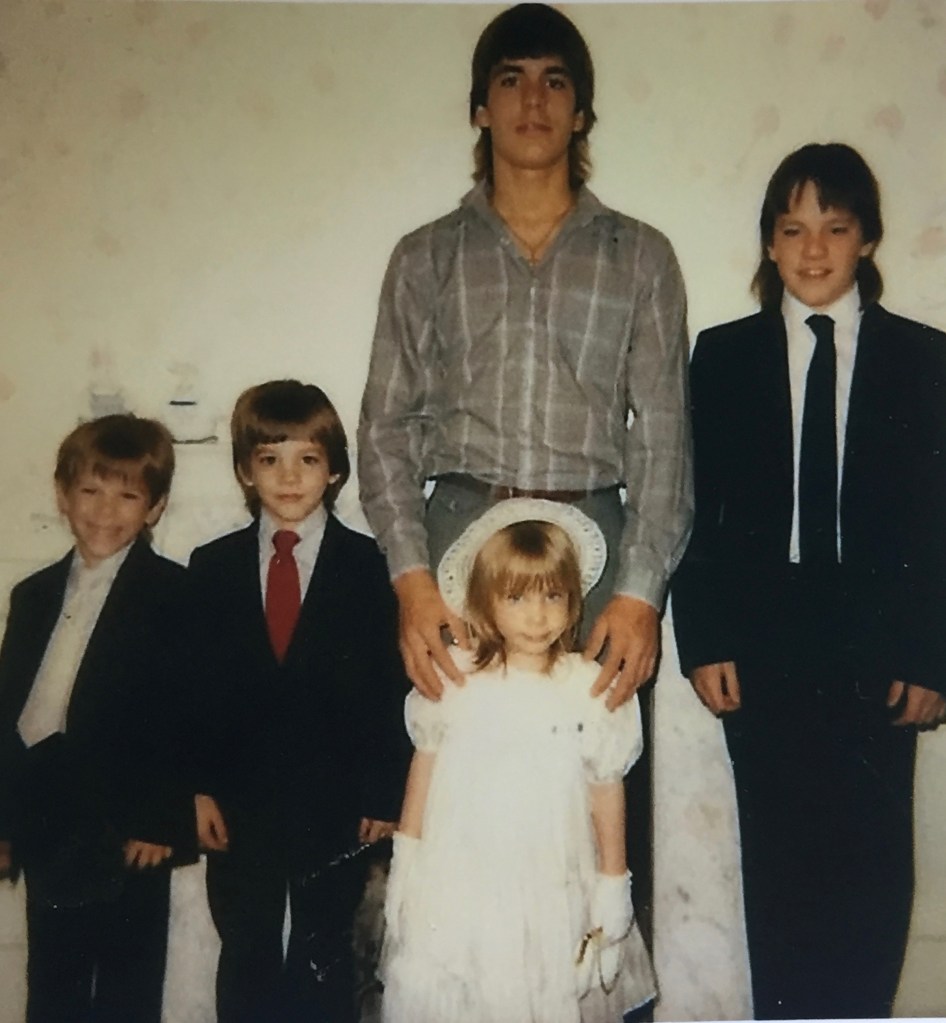
After Sunday School, everyone would enjoy the coffee and donuts that Sam and I had prepared. Then it would be time for the Acolyte Race, a very-quick-walking-no-running-allowed-in-the-sanctuary race to the back of the church where the two candle lighters hung. Two of my brothers (the other two were too old for this race), the Gordon boys (their sister was too young for this race) and I were loyal acolytes and had one very simple rule: whoever touched the candle lighters first would get to be an acolyte. I was fast enough to win from time to time, but I also think Alex and Brian sometimes took pity on me and lost on purpose. My twin brothers, Andrew and Matthew, were ruthless and always went for the win. The candle lighters were small, gold shepherd hooks that hung on either side of a stained-glass window. The curved hook had a bell-shaped dampener on the end (for extinguishing candles) and the point had a small wick that Sam would light for the two victorious acolytes. When the wick was too short, it was always very exciting to see if Sam could get a fresh wick in place before our music cue came. I remember some close calls, but he was always fast enough.
In Sunday School, we learned that Jesus said, “I am the light of the world,” so we carried His light in to symbolize His presence with us. To be an acolyte was a delicate balance, as you had to walk down the aisle at the same speed as your fellow acolyte who was in the other aisle but also walk at a slow enough pace to keep the flame alive. And, of course, the boys turned it into a game of how fast we could walk without the flame going out (covering the flame with your hand as you walked was considered cheating). And if you lost this game, you had to have your candle re-lit by the victor at the front of the sanctuary. At the end of the service, during the last hymn, we would return for the candle flame and carry it out as a reminder that we should go out into the world as lights for God, always trying to be a bit better, a bit kinder. I loved the symbolism and took it very seriously. Every Sunday felt like another chance to do things right and well. So when my brothers picked a fight with me moments after church and I would retaliate, I was extra annoyed because I had been in the midst of trying to be good.
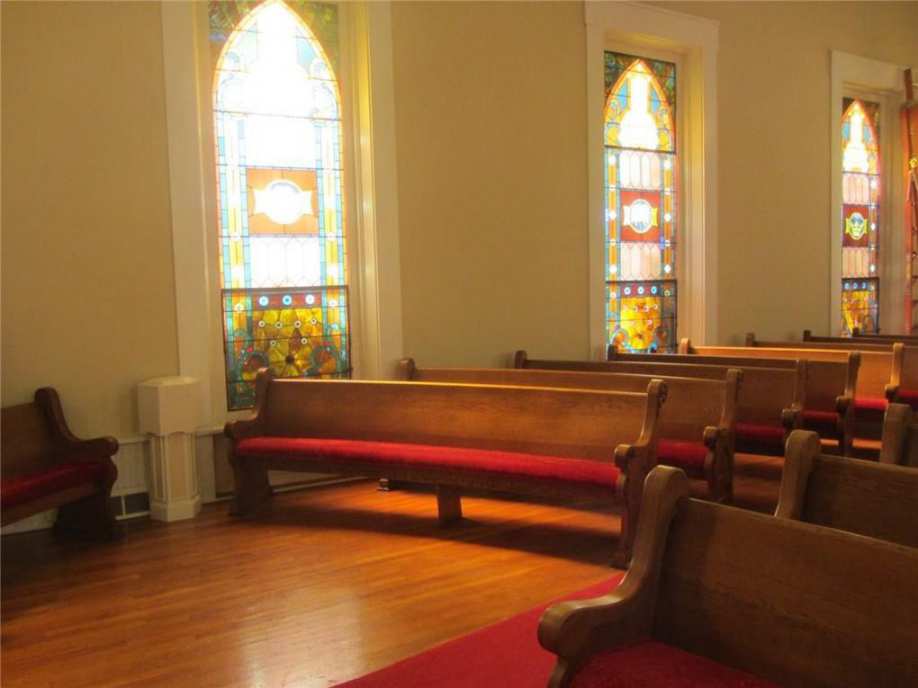
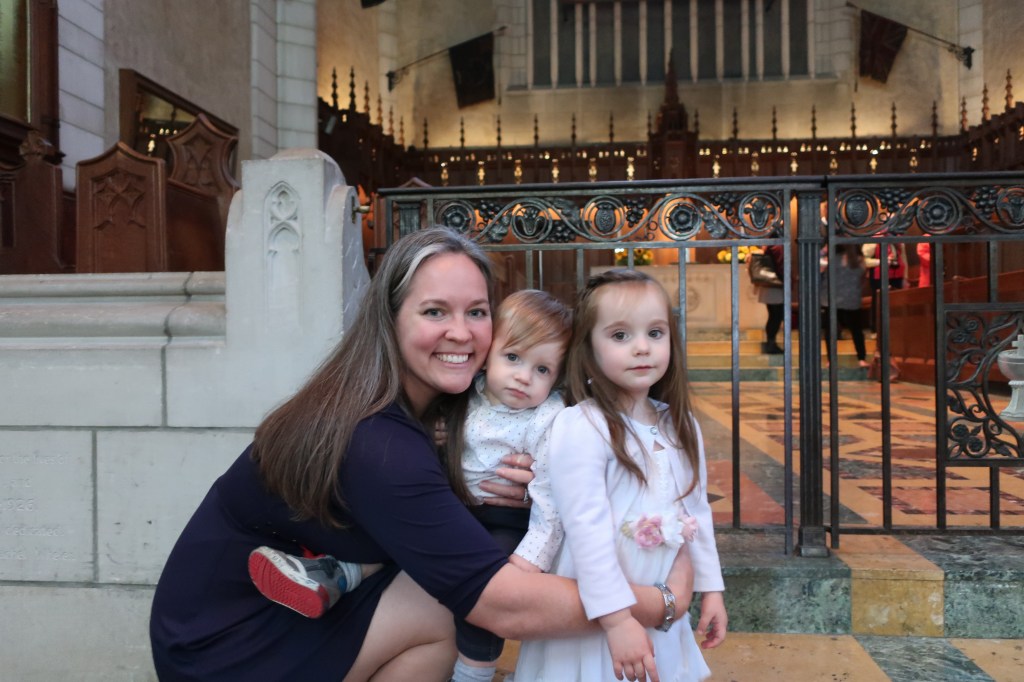
Everyone had their pew, and we all always sat in the same one. If a visitor came and sat in your pew, you would still greet them warmly but also with a slight pause as you wondered if you should tell them they were sitting in your spot. When I attended church in Boston, I liked to move around to a different pew every Sunday to take in the Trinity Church in Copley Square from different angles. I always took a careful look around to see if anyone was eyeing the pew I was sitting in, fearful of taking someone’s regular spot. Surely it happened at least once, but Episcopalians are as polite as Presbyterians and no one ever said anything. I have small children now and sit at the back of the Church of St. Andrew and St. Paul in Montreal, Quebec, in case they start to act up or need to move around. My mom, however, was far braver and sat in the front in the very first pew on the right. For this pew was behind the piano and she wanted to give us something to look at. I can still see Ruth Heis’s hands on the keys of the grand piano, moving across them easily to accompany our hymns or the small choir. And those same hands would accompany me when I was older and became a soloist.
Ruth’s husband, Leonard, was quiet and kind and puttered around the church doing small jobs that needed done. They had four boys, who probably worked at their chicken farm like my brother, Jeffrey. I went with my mom to pick him up once and will never forget the sea of chickens in the long chicken house. I was certain that if I fell in they would swallow me up and I would drown in chicken feathers. I recently asked him what his job was there — he loaded the chickens and could pick-up seven at a time, explaining “four in one hand and three in the other” and I teased him and said, “I thought for sure you would do five and two.”
In addition to Ruth, we had Hazel Jones on the organ. The organ was up next to the pulpit, so I didn’t get to see her hands work but I could hear them. How lucky we were to have their talents.
This is where I first sang “In the Garden” and one of my mom’s favorites “The Church’s One Foundation” and my favorite “Come, Thou Fount of Every Blessing” and our favorite “Holy, Holy, Holy.” (We have attended countless services together and anytime we see “Holy, Holy, Holy” in the bulletin, we point it out to each other and nod like they knew we were coming.) It’s where I memorized The Lord’s Prayer and The Apostles’ Creed, not from trying but over time the words simply seeped into my memory. It’s where I first played Mary in a Christmas pageant and felt the sacredness of Christmas hymns and traditions. It’s where I wore my first Easter dress (with hat and gloves and purse that I remember shopping for with my dad) and felt the hope of spring and renewal. It’s where I received my first Bible, which has been the one I turn to most in life, perhaps because it contains (what I thought was) God’s signature on the dedication page.
Teresa Patmore was the choir director and our soloist (and had four boys like my mom). She sang the most beautiful songs and gave me my first voice lessons. When she was teaching me about the musical scale and how to reach high notes, she told me to imagine the stars and how some are further away than others. And sometimes you need to reach a little higher for some and then come down. My mom loved to sing in the choir with her fellow altos — Jane, Kathy Lilley, and Carrie Moistner. I was proud to join them in the choir as a soprano after Teresa helped me discover I could reach those high notes.
“Come, Thou Fount of Every Blessing” https://www.youtube.com/watch?v=TVqTSjc8Vj0
I can still see Widows Row, a line of well-dressed, sweet old ladies who kept each other company because their husbands no longer could — Bernie Diffenderfer, Ruth Doddridge, Margaret Horseman, Lyda Potter, and Phyllis Worl. When we moved into a house on Johnson Street in Dublin, Margaret brought us our first chicken spaghetti that would become a staple in my mom’s kitchen. When I think of my childhood meals, chicken spaghetti is one of them — what if Margaret had never introduced it to us?

There were older girls that I admired — Meghan Alexander and the Potter twins, Emily and Ann. I must have loved their hair because when I think of them, I first remember their hair — Meghan’s shiny blonde hair, Emily and Ann both redheads but Emily’s was fiery and curly while Ann’s was lighter and smooth. When I saw Emily star in the high school production of Annie Get Your Gun, I was surprised to find she existed outside of church and wanted to tell everyone in the Milton school auditorium, “I know her!”
It could be a place for love connections, too. My mom had a strict rule for my two teenage brothers, Rob and Jeffrey — if their friends spent the night on Saturday then they came to church with us on Sunday. Rob’s best friend, Wayne, often tagged along, and as a little girl, I thought his last name was “Andjoni.” In coming to church with us, he met a girl named Joni and he has been “Wayne and Joni” ever since. And my brother, Jeffrey, would pine over his future wife who was at church sitting with an older boy. Perhaps that’s why he didn’t like coming to church and found reasons to avoid attending, God forgive him. One Saturday night, he picked up some friends who had had too much to drink. One of them threw up outside the passenger window while Jeffrey was driving. He got them home safely, and after his late night, he got a pass from church the next morning. But he did not get a pass for the vomit that decorated one side of the car, unbeknownst to our mom until she parked the car at church. When we got home, she hollered, “JEFFREY MARCUS YOUNGHOUSE!” And he came scrambling from his room asking, “What? What?!” And she said to him, “I took that car to church!”
There was a Food Pantry that I remember helping with from a young age, establishing early on to do what you can for others. I carefully counted the cans and separated them into their proper batches before we packed them and handed them out. And there were committees because we are Presbyterians and we love committees. I would be busy in the playroom while my mom took care of God’s business. She was an accountant and eventually became Treasurer for the church. One Sunday, Sam and I arrived to find we had no water to make coffee — the horror! She had forgotten to pay the water bill and was so embarrassed, saying to us in the car after church, “Who turns off the water for a small church without any notice?!” Even with this blunder, she made her way to being an Elder, but it always bothered her that it was out of convenience and not earned (she was Treasurer so they needed her on the Session thus they made her an Elder…I suppose she wanted to be an Elder for her wisdom and tact and not her math skills).
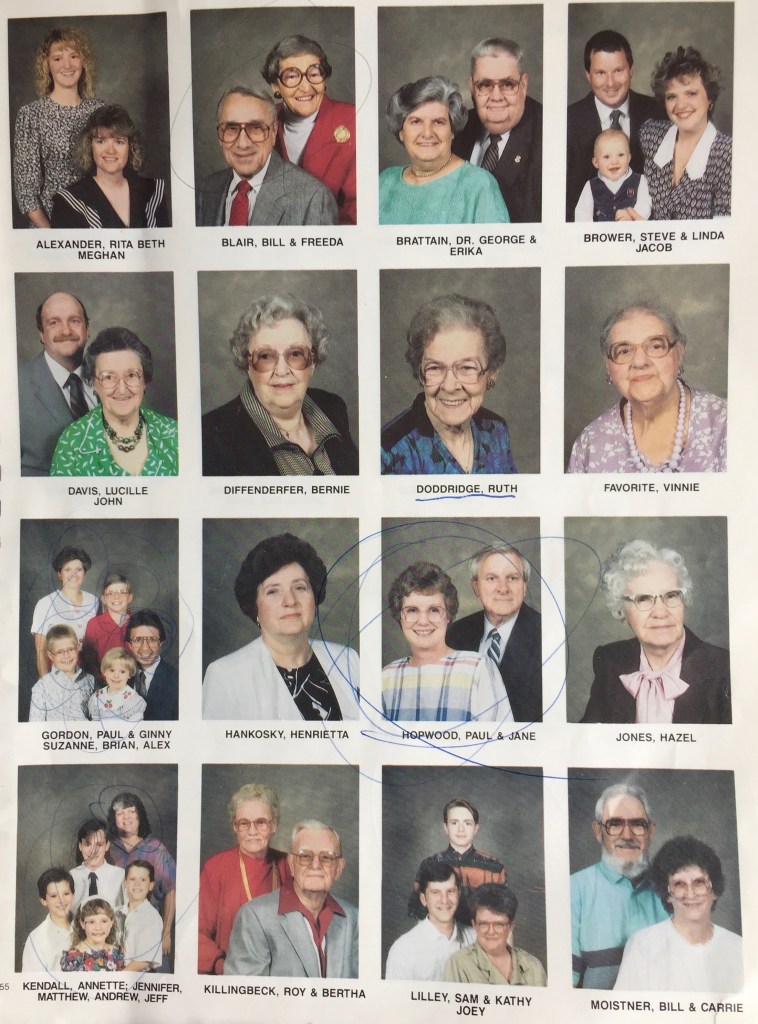
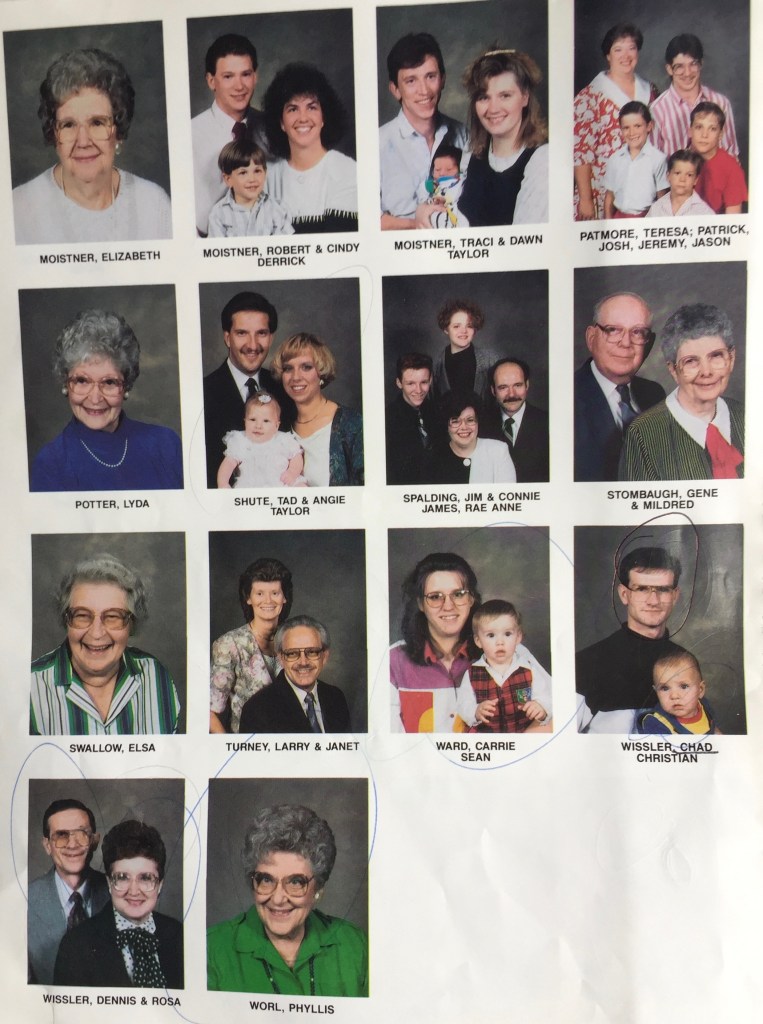
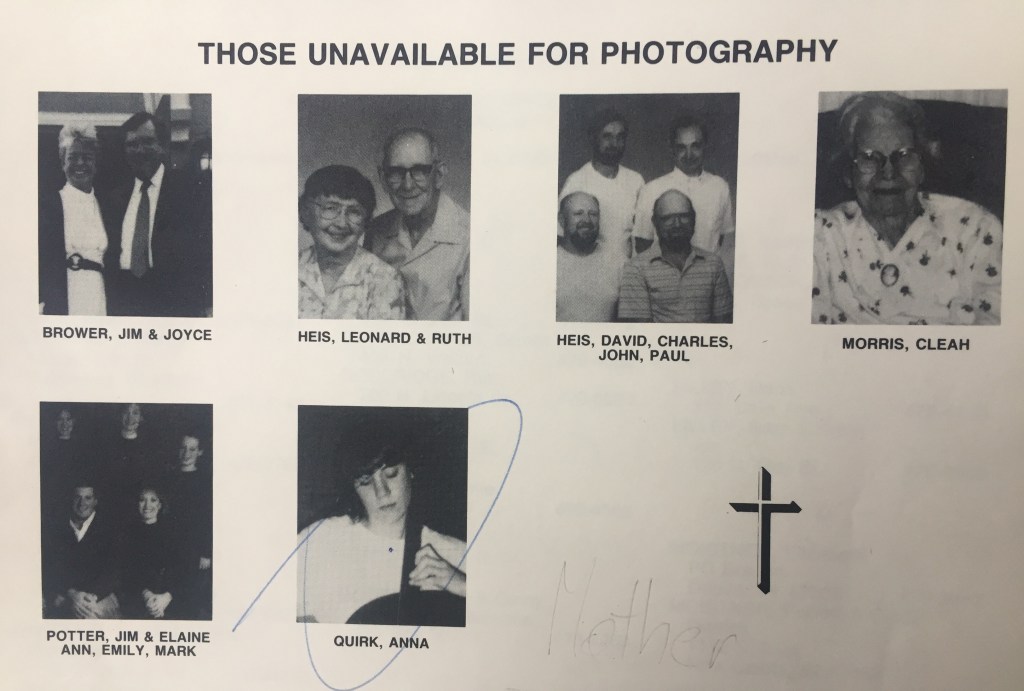
This community of people are all frozen in time for me. Perhaps my memory holds their faces for me or perhaps it is because I still have the church directory that was made when I was nine. Some people weren’t available for the photo shoot and I scribbled in it a bit, most emphatically circling Paul and Jane Hopwood’s photo in case anyone was looking for God and His wife, but I think I held onto it as a little girl because these people were like an extended family — the older ones like grandmas and grandpas, the younger ones like aunts and uncles, their children like cousins I played with or looked up to. They taught me the importance of community and about family that you aren’t born into but rather choose (and are lucky enough to find). And we were led by the goodness and grace of Paul and Jane. How lucky we were to have each other, and how lucky I was to experience this as a child to give me a firm foundation to help me make it through this world.
Rita Beth Alexander and her daughter Meghan
Bill and Freeda Blair
Dr. George and Erika Brattain
Jim and Joyce Brower
Steve and Linda Brower and their son Jacob
Lucille Davis and her son John
Bernie Diffenderfer
Ruth Doddridge
Vinnie Favorite
Paul and Ginny Gordon and their children Alex, Brian, and Suzanne
Henrietta Hankosky
Leonard and Ruth Heis and their sons David, Charles, John, and Paul
Paul and Jane Hopwood
Hazel Jones
Annette Kendall, and her children Robert (not pictured) and Jeffrey Younghouse and Andrew, Matthew, and Jennifer Barr
Roy and Bertha Killingbeck
Sam and Kathy Lilley and their son Joey
the Moisteners (many, many Moisteners — Bill and Carrie, Elizabeth, Robert and Cindy and Derrick, Traci and Dawn and Taylor)
Cleah Morris
Teresa Patmore and her sons Patrick, Josh, Jeremy, and Jason
three generations of Potters (Lyda, her son Jim and Elaine, and their children Ann, Emily, and Mark)
Anna Quirk
Tad and Angie Shute and their daughter Taylor
Jim and Connie Spalding and their children James and Rae Anne
Gene and Mildred Stombaugh
Elsa Swallow
Larry and Janet Turney
Carrie Ward and Sean
Chad and Christian Wissler
Dennis and Rosa Wissler
Phyllis Worl

Photos of church were found on the following Web site and the author is eternally grateful to the person who took them:
https://www.oldhousedreams.com/2018/03/09/1858-church-cambridge-city-in/

 coming full circle
I love this!
LikeLiked by 1 person
Beautiful memories of our special little church. Thank you for sharing.
LikeLiked by 1 person
Beautiful!! It took me back in time & reminded me of things I had forgotten.
– Thank you my sweet sister
LikeLiked by 1 person
Thank you so much for this wonderful memory and reflection on my father – your Rev. Paul Hopwood. I have been looking for things online on him and came across this wonderful memory of yours. My sister Mary Blankenship (at the time) was the secretary at the church for a short time. I saw the church was up for sale in the recent past as a “house” !! Anna and Jane are still well. My father passed on from this life in 2016. I miss him. Your generosity in sharing how he influenced your life is such a blessing to my soul in this moment. Thank you is insufficient. How funny that I also ended up in Boston, have attended Trinity, and live in Cambridge – another Cambridge so unlike Cambridge City, IN. From one Hoosier to another who each shared Rev. Paul Hopwood as part of our formation in life, be well and may you and your family continue being blessed and happy in Quebec. –Ruben
LikeLike
Hello, Ruben, thank you for your kind message. A few years ago, I also searched online for information about your dad. When I couldn’t find anything beyond his obituary, I decided to write about what I could remember. I sent it to my mom and to Jane, and then I made this website so I could put it somewhere on the Internet so others could find more about him and the impact he made (in Cambridge City but no doubt in all the other communities he served as well). I am very happy you found it and could connect with it. I am sorry for your great loss in 2016. Even though I hadn’t seen him in many years, I was very sad to learn such a good man was no longer among us. Of all the places in the world, it is funny that our paths crossed in Boston and Cambridge. I studied at Emerson College and then lived in the South End while working in Cambridge’s Brattle Square. Happy to know Anna and Jane are well. I remember your sister, Mary, as I went to school with John, Abigail, and Elizabeth. I hope you and yours are well, and thank you again for the memorable message.
LikeLike
Jenny,
You did an amazing job of capturing Our Church. I dearly loved my time there and if you remember, I taught you in SS class along with my own children and your brothers and Brian and Alex Gordon. I knew your mother well and Sam and all the others you write about. I went there from 1992-2002. What Ruben said is so true. You have given us a gift of your view of our father and the church he loved.
LikeLike
I remember you well, Mary 🙂 Thank you for your message, as it makes me very happy that the ones who loved him most can read about the impact he had on others. His memory lives on through all the lives he touched.
LikeLike
What beautiful, blessed memories. Thank you for sharing this. ❤️. We do miss Grandpa Paul deeply, but our hope is in the Lord, the maker of Heaven and Earth and someday we hope to be with Him and all of the faithful departed for eternity!
LikeLiked by 1 person
He was a blessing. My mom still remembers him walking across our lawn, as he was going door-to-door to introduce himself and invite everyone to church. How lucky we were to know him ❤️ I had no idea he served so many communities in his lifetime until I read his obituary.
LikeLike